Women face significant barriers to financial inclusion and these barriers rarely exist in isolation. They are interconnected, reinforcing one another across financial systems, social norms, infrastructure, and policy environments. 

This project helps practitioners, policymakers and funders design programs and interventions that target the constraints that matter most and unlock greater impact.


About the project

This resource maps barriers to solutions for women’s financial inclusion across different customer segments and different markets. Our goal is to help financial service providers (FSPs), policymakers, and practitioners turn the latest insights into action.

GRID Impact launched this resource in 2021 and updated our analysis in 2023. Originally, the work focused on the barriers most proximate to women's daily lives.

In partnership with Women’s World Banking and support from the Gates Foundation, this latest refresh expands the scope to include barriers at the financial service provider, policy, and infrastructure levels — producing a more holistic picture of what it will take to help eliminate gender inequity. Building on GRID Impact’s global evidence review and meta-analysis, Women’s World Banking uses a 360-degree research methodology—combining quantitative review of 93 financial products across 15 countries, an industry survey, global evidence mapping, executive interviews, and an expert advisory committee—to identify 22 supply-side barriers holding FSPs back—set within the wider system shaping women’s financial inclusion.

About the barriers

This section presents a review of 44 barriers to women’s financial inclusion, organized into eight categories. Each barrier contributes in different ways to the persistent gender gap in financial access and use. 

With each barrier page, you will find the latest evidence on how this barrier affects WFI and examples of interventions that successfully addressed it.


Icon

Social Norms

Icon

Policy & Regulation

Icon

Digital & Physical Infrastructure

Icon

Institutional Norms & Practices

Icon

Women's Participation in the Workforce

Icon

Consumer Protection

Icon

Product & Market Design

Icon

Entry & Capability

Icon

None of these barriers exist in isolation. Together they create an inequitable financial system - one that keeps women from services and products that could change their lives.

Connected Barriers Map

This map illustrates how different barriers to women’s financial inclusion are interconnected. 
Larger nodes represent barriers with more connections to others, highlighting potential leverage points where targeted interventions could create broader system-level impact.

barrier map-new


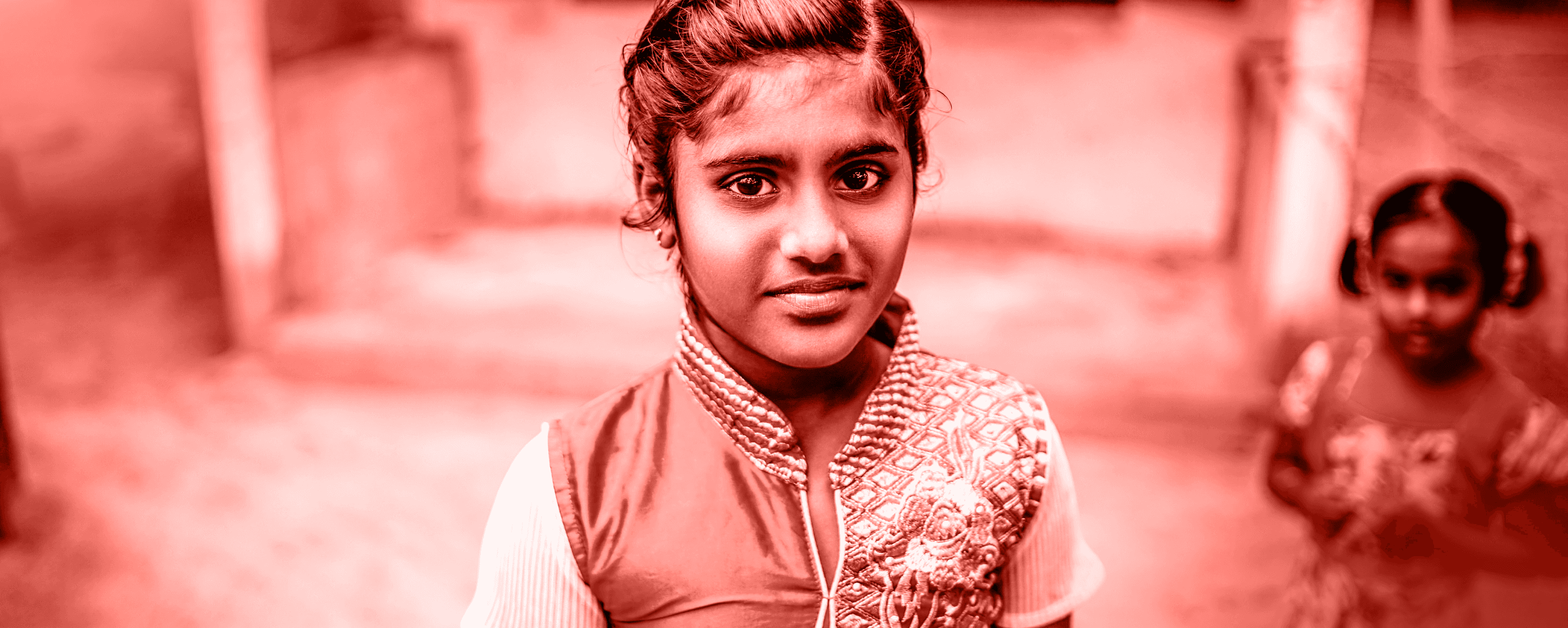
Two young Indian girls playing on the street

Financial Inclusion Segments

Women are not a monolith - different barriers affect different women in different ways. 

These four segments, developed by Mathematica using Findex data, reflect a woman's current level of and potential for financial inclusion. The segmentation helps identify which barriers are most relevant for each group, enabling a more targeted approach to prioritizing interventions.

Visit the Resources page to filter barriers, exemplars, and country data by segment.


01

Excluded, marginalized

Does not own a financial account and Has not conducted certain transactions in the past 12 months and either Does not have an income source (neither in the workforce nor have received a G2P payment)  or Cannot access financial services (does not have a mobile phone, and financial institutions are too far away)

02

Excluded, high potential

Does not own a financial account and either Has conducted certain transactions in the past 12 months or Has an income source (from being in the workforce or receiving a G2P payment)  and Can access financial services (does have a mobile phone and financial institutions are not too far away)

03

Included, underserved

Owns a financial account and Has not conducted more than one type of advanced transaction in the past 12 months

04

Included, not underserved

Owns a financial account and Has conducted more than one type of advanced transaction in the past 12 months

Download an overview of the segments to see how we define and identify different types of female customers in a market.

A woman

Customer Journey

The financial inclusion segments map closely to the customer journey from access to empowerment.

Graphic representation of a customer journey


Phase 1

Account Ownership

Customer enrolls and opens a digital financial services (DFS) account. This phase also includes pre-account ownership where the customer is unaware of the account - or aware but not interested enough to sign up.

Phase 2

Basic Account Usage

Customer has an account. However, they are primarily using it for basic transactions such as peer-to-peer transfers.

Phase 3

Activate Account Usage

Customer begins to explore different use cases for the service and the account.

Phase 4

Economic Empowerment

The customer uses a full range of DFS services that meet her needs and has the confidence and knowledge to choose what's right for her.