
Limited workplace protections & benefits
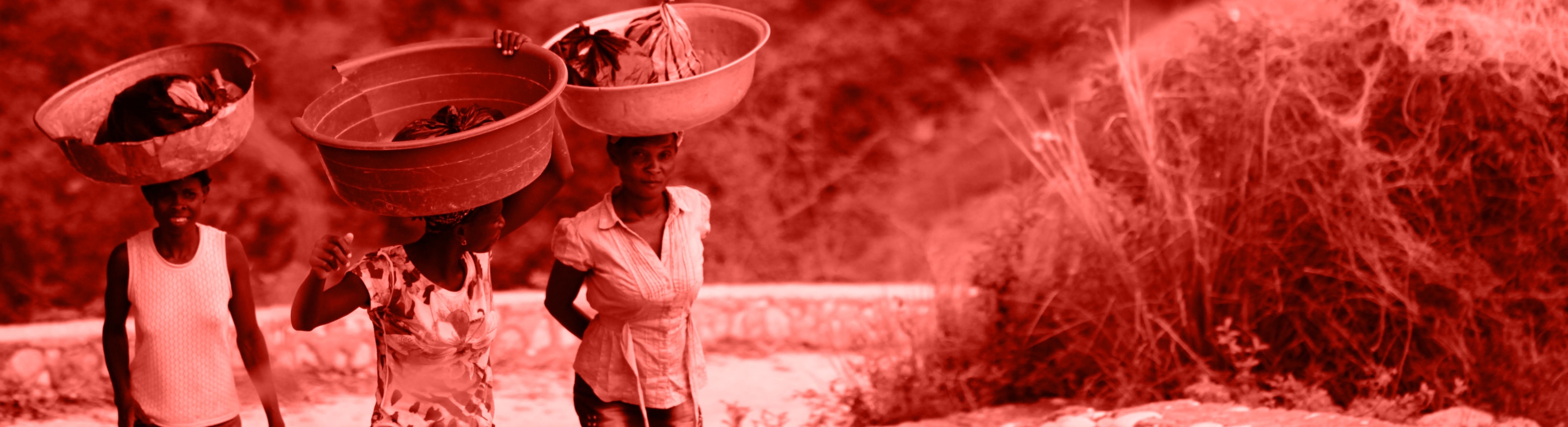
Workplace protections - including fair labor laws, safe working conditions, maternity benefits, and access to social insurance - help ensure stable employment and predictable income. Women are overrepresented in informal and domestic work, where these protections are often weakest. In Indonesia, 97% of female informal workers lack employer-linked social protection and 98% do not receive maternity benefits, disincentivizing labor force participation. Without stable income, documented employment history, or employer-linked benefits, many women struggle to save consistently, qualify for credit, or maintain consistent engagement with financial services.
4 Connected Barriers
Most Relevant Segments
- 01. Excluded, marginalized
- 02. Excluded, high potential
- 03. Included, underserved
- 04. Included, not underserved
Most Relevant Customer Journey Phases
- Phase 1: Account Ownership
- Phase 2: Basic Account Usage
- Phase 3: Active Account Usage
- Phase 4: Economic Empowerment
Key Evidence
Informal and domestic workers, of which a disproportionate share are women, are largely excluded from labor protections and the formal financial system.
Informal work makes up a significant portion of global employment, especially in LMICs and especially for women. However, these jobs often exist outside of the regulatory environment, leaving workers vulnerable to income shocks, sudden job loss, and potentially unsafe working conditions, and without social protections such as insurance, paid leave, and contracts. Evidence from the COVID-19 pandemic and its aftermath indicates that this vulnerability is exacerbated in times of shock and uncertainty. Similarly, informal businesses are frequently cut off from formal financial operations.
- Informal workers account for nearly 60% of the global workforce—and up to 90% in LMICs. While these individuals are vital to their economies, they are typically excluded from formal labor protections, contracts, and social insurance systems. The absence of formal benefits and social protections makes accessing child care difficult—reinforcing norms that leave women in the home—and undermines the financial security of entire households. (OECD, 2024)
- Street vendors and domestic workers face elevated risks of violence and harassment at work, while self-employed workers often lack pension and maternity protections, increasing vulnerability to poverty. (UN Women, 2023)
Even in formal jobs, legal and social protection systems may not equitably reach women and men.
Many countries lack basic gender-equal labor protections—such as equal pay laws, equal pension eligibility, and adequate and equitable parental leave. Existing social security systems also tend to penalize career interruptions or part-time work related to caregiving, leaving women with lower lifetime earnings and retirement benefits.
- Fewer than half of countries mandate equal pay for equal work despite evidence that shows wage gaps narrow in countries that implement legal reforms advancing gender equality and increasing female labor force participation. (IMF, 2022)
- Across 62 economies, women and men are eligible for full pension benefits at different retirement ages. On average, men receive larger pension payments than women and experience greater financial security at the end of their working lives. (World Bank, 2023)
Structural discrimination and occupational restrictions limit women’s economic opportunities.
Many economies impose legal or structural barriers that restrict women’s participation in certain occupations, such as restricting their ability to work in mining or operate industrial machinery. Women are also more likely to work in part-time, temporary, or low-protection jobs and face slower career progression, harassment risks, and heavier unpaid care burdens.
- About 90 economies continue to impose at least one occupational restriction on women, such as restrictions to work in mining or operate industrial-grade machinery. These legal constraints are strong predictors of gender wage gaps. (IMF, 2022)
- The 2026 report from Women, Business and the Law found that 73 economies restrict women’s employment in certain tasks, industries, and occupations, and at certain times of day. The most common sectors with such restrictions globally are mining (43 economies), manufacturing (36 economies), and construction (23 economies). Restrictions tend to be related to capital-intensive, industrial work, which is also generally higher paying. (World Bank, 2026)
Interventions that have successfully addressed this barrier
The following Exemplar represents one evidence-based interventions that has shown success in addressing this particular barrier. There may be other Exemplars for this barrier in the larger Barriers & Exemplars Analysis compendium deck.